
Key Takeaways
- Invisalign uses a sequence of clear aligners to move your teeth into place.
- Your dentist creates a treatment plan and provides aligners based on your teeth.
- You usually wear each set of aligners for 20 to 22 hours a day and replace them every one to two weeks as your teeth gradually move into position.
- Take out the aligners when you eat or clean your teeth.
- You may need retainers to keep your teeth in place after treatment.
Invisalign Dental Treatment: An Overview
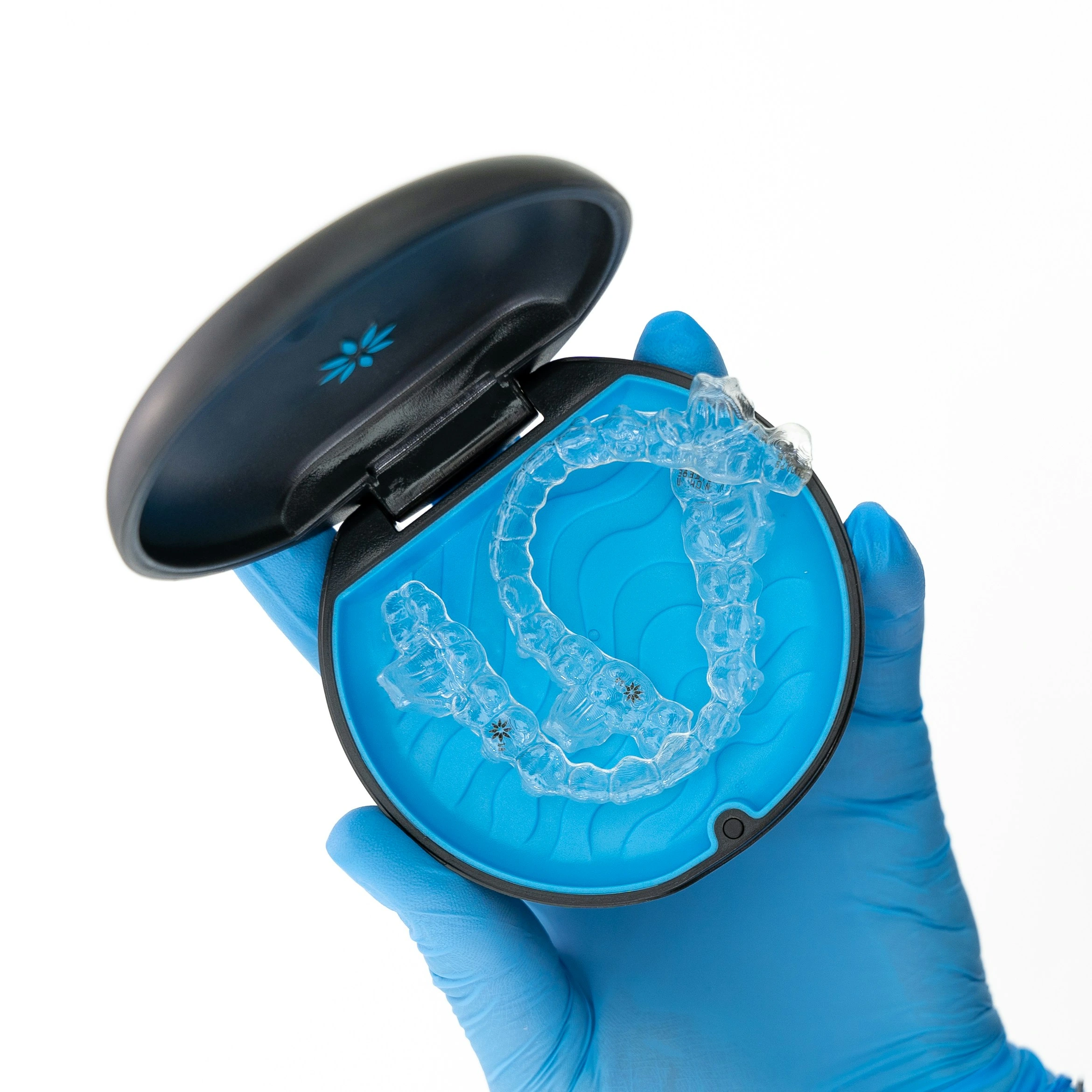
Invisalign is a brand that offers clear aligners to straighten teeth. They are made from a patented thermoplastic material called SmartTrack and come as a series of transparent, removable aligners. Each aligner is custom-made to fit your mouth and gently moves your teeth into place over time.
Invisalign aligners can help fix a variety of teeth alignment problems, including crowded or crooked teeth, gaps, and different types of bite issues. These may include overjets, overbites, underbites, crossbites, open bites, deep bites, and midline discrepancies, where the upper and lower front teeth do not line up properly.
The right Invisalign treatment options depend on the patient’s teeth alignment concerns and whether they are an adult, teen, or growing child. If you are considering Invisalign, let us first walk you through its benefits, the treatment process, cost, and what to expect.
What Are the Benefits of Invisalign Treatment?
Here are some key benefits our patients at University Ave Dental have reported after Invisalign orthodontic treatment:
- A more discreet look: Invisalign aligners are clear, so they are less noticeable than traditional braces while you straighten your teeth.
- Greater comfort: Without metal brackets and wires, Invisalign aligners may feel more comfortable and are less likely to irritate your cheeks and gums.
- Easy to remove: You can take out the aligners for meals and oral care, so you can follow your normal routine.
- Freedom to eat normally: Since you remove the aligners before eating, you can continue enjoying the foods you like without the food restrictions associated with traditional braces.
- Fewer dental visits: Invisalign treatment may require fewer dental visits. On average, Invisalign patients have about 30% fewer visits than people with fixed braces.
Step-by-Step Invisalign Treatment Process
At University Ave Dental, Dr. Logan Connor guides you through each stage of the Invisalign treatment process. Here’s a brief overview:
1. Initial Visit and Treatment Plan
Your doctor will examine your teeth, bite, and gum health to see if Invisalign is right for you. They will take a 3D scan of your teeth and use specialized software to plan how each tool should move, from your first aligner to your final one. You can also see how your smile may look after treatment.
2. Creating Your Customized Invisalign Aligners
Once your treatment plan is ready, a series of clear plastic aligners will be made to fit your teeth.
3. Wearing Your Invisalign Aligners
When you receive your first set of Invisalign aligners, your dentist will check their fit and make sure they are comfortable. You will have regular check-ups to track your progress and get your next set of aligners. Each set is usually worn for about 20 to 22 hours a day and replaced every one to two weeks, gradually moving your teeth toward their planned positions.
4. Completing Treatment and Maintaining Your New Smile
After Invisalign treatment, you will need to wear a retainer to help keep your teeth in their new positions. Your dentist can recommend a custom-made retainer that suits your needs.
How Much Does Invisalign Treatment Cost?
The cost of Invisalign treatment usually falls between $3,500 and $8,000, based on your treatment needs and the number of aligners required. In many cases, the Invisalign treatment cost is similar to that of braces.
We understand that not everyone has dental insurance, which is why University Ave Dental offers a convenient in-house savings plan to help make quality care more accessible. This plan is available for both adults and children in your family. Reach out to our office anytime, and we’ll gladly walk you through the details and get you enrolled.
What Results Can You Expect From Invisalign?
With Invisalign, you can achieve straighter teeth, a better-aligned bite, and a more confident smile you’ll want to show off. Beyond aesthetics, properly aligned teeth can also make brushing and flossing easier, reducing your risk of cavities and gum disease down the road. Many patients also notice improved chewing function and less strain on their jaw once their bite is properly corrected.
Your exact results will depend on the complexity of your case and how consistently you wear your aligners as directed. Most patients see the best outcomes when they wear their aligners 20 to 22 hours a day. While individual timelines vary, many people begin noticing visible changes within just a few months of starting treatment, with final results typically achieved within 12 to 18 months.
As with any treatment, results can vary from person to person, so your dentist will give you a personalized idea of what to expect based on your unique case.
What Does the Research Say About Invisalign?
When it comes to tooth movement, studies have found that Invisalign and traditional braces can be similarly effective for some movements, such as correcting rotated teeth, closing gaps, evening out tooth height, and improving root alignment. However, Invisalign may be less effective at rotating round-shaped teeth and handling certain complex movements.
The type of case also matters. Invisalign may work well for mild or simple teeth alignment problems, especially when tooth extraction is not needed. In one study, treatment with Invisalign took 44% longer than traditional braces in extraction cases. Invisalign may not fully correct a significant overjet, where the upper front teeth stick out too far in front of the lower teeth, while braces may be more effective for this type of correction.
Research has also looked at other aspects of Invisalign treatment. Invisalign may be a suitable option for people with thin gums because it may help limit the risk of gum recession, although more evidence is needed to confirm this. One study also found that Invisalign patients finished treatment about 5.7 months sooner than those treated with traditional braces.
Making The Right Choice For Your Smile
Invisalign dental treatment can help with a range of alignment and bite concerns, but the right treatment for you will depend on your teeth, bite, and the complexity of your case.
If you’re exploring options for Invisalign in Blaine, MN, Dr. Logan Connor and the team at University Ave Dental are here to help. We’ll assess your teeth, bite, and gum health, walk you through what treatment involves, and help you decide if Invisalign is the right fit as part of your cosmetic dentistry journey.
Get in touch with our dental team today to arrange a consultation.
Call: (763) 784-1242
Email: office@universityavedental.com
Visit: 10155 University Ave NE Suite #112, Blaine, MN 55434
Office Hours: Monday through Thursday, 7:00 AM-5:00 PM; Friday, 7:00 AM-1:00 PM
FAQs
Depending on the complexity of your case, you may start seeing results in as little as 6 months, although the total treatment time can vary.
Use a soft toothbrush and lukewarm water to gently clean your aligners every day. Avoid hot water, as it can deform the aligners.
If you have veneers or crowns, your dentist can assess your dental work and see if Invisalign is right for you.
If you have bridgework, Invisalign may not be suitable because bridges connect multiple teeth, so your dentist will need to assess your specific case.